
Last updated November 23, 2026
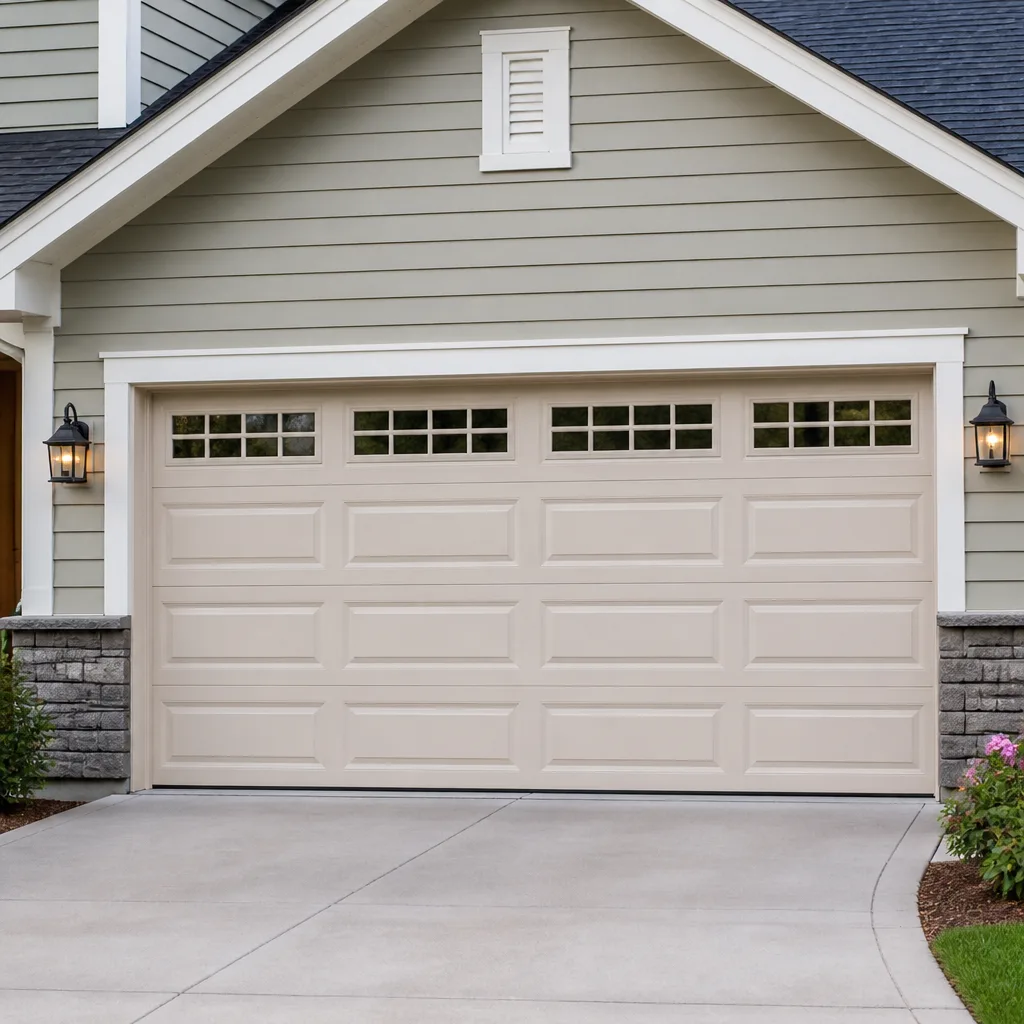 Raised-panel steel
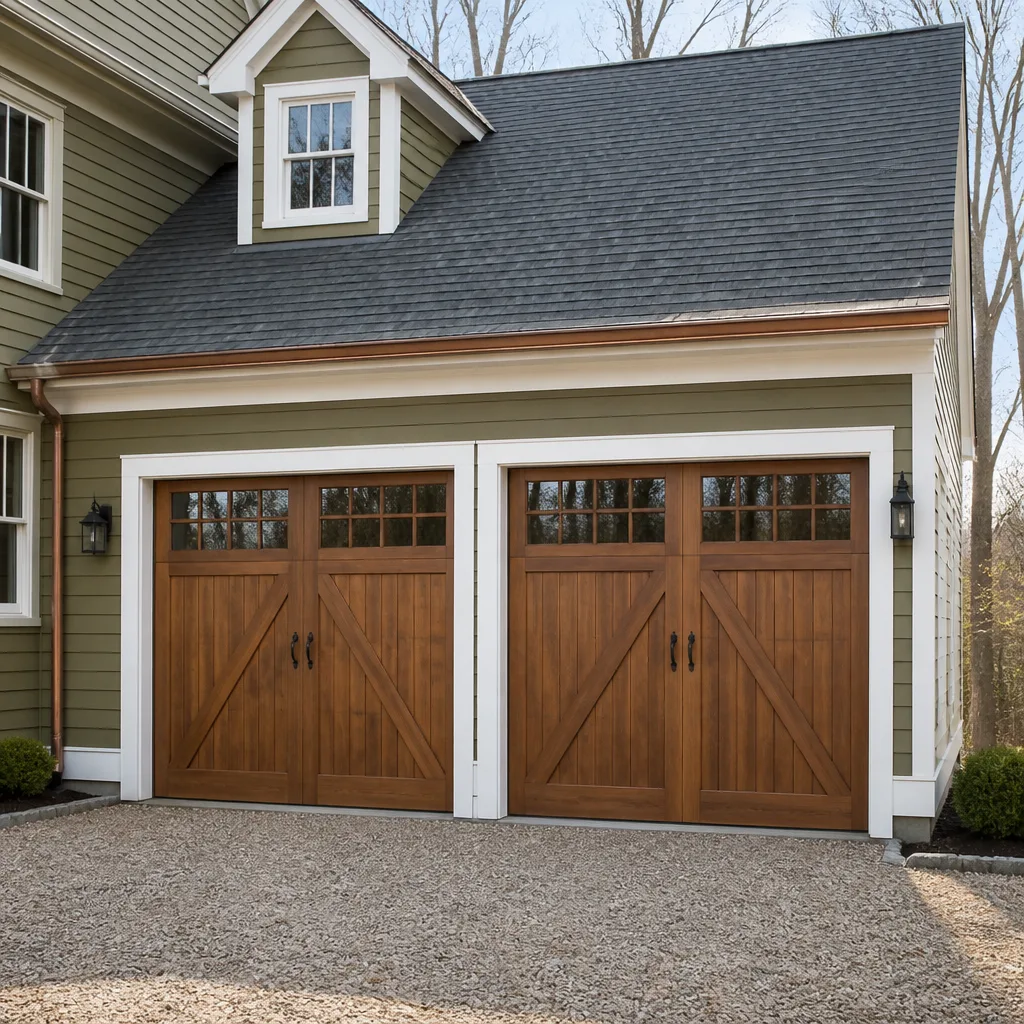 Carriage house
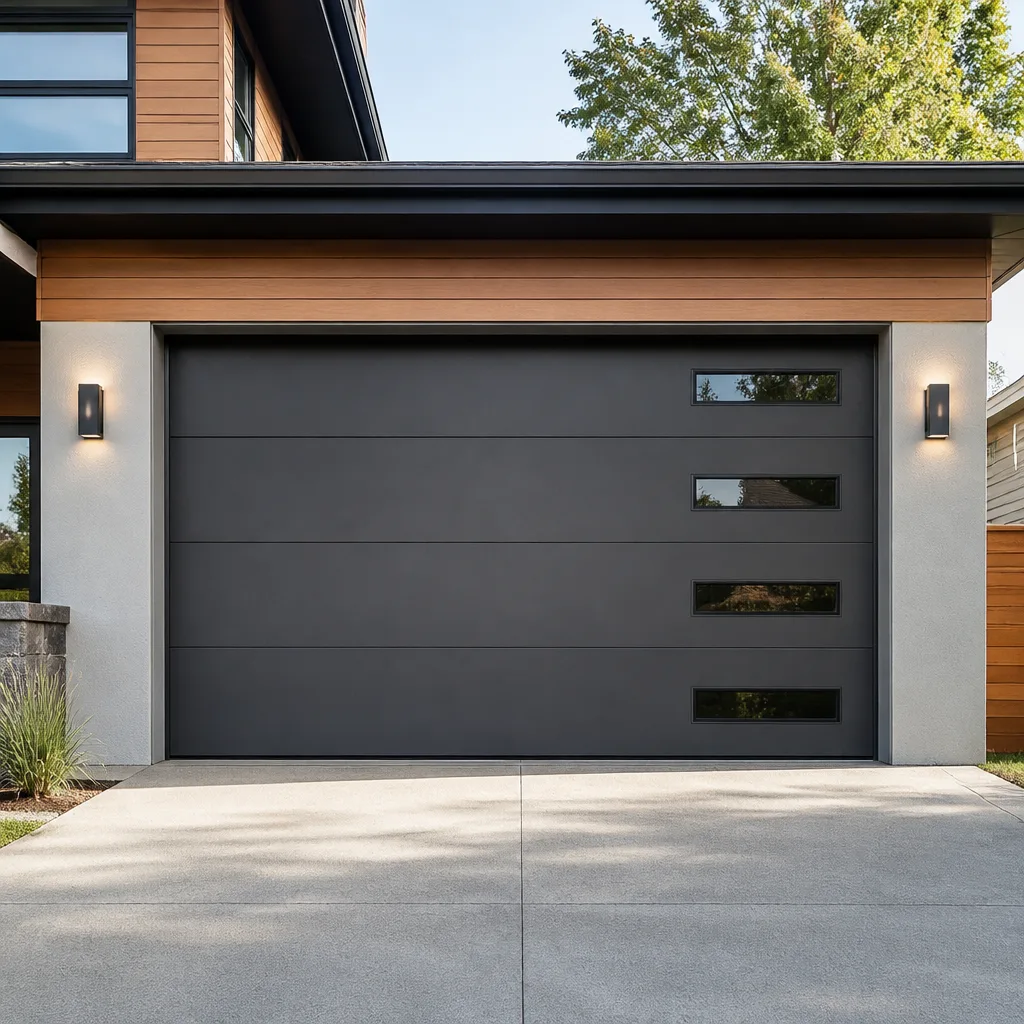 Modern flush
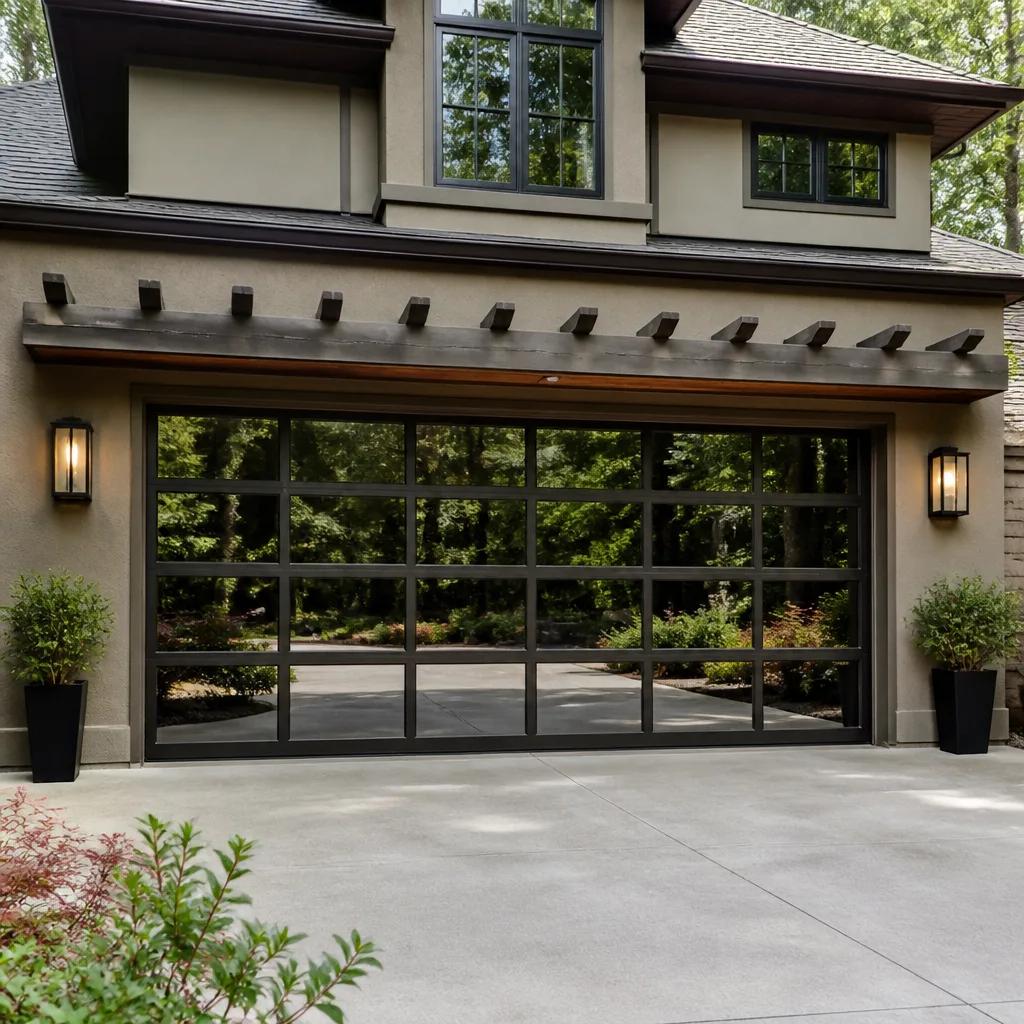 Full-view glass
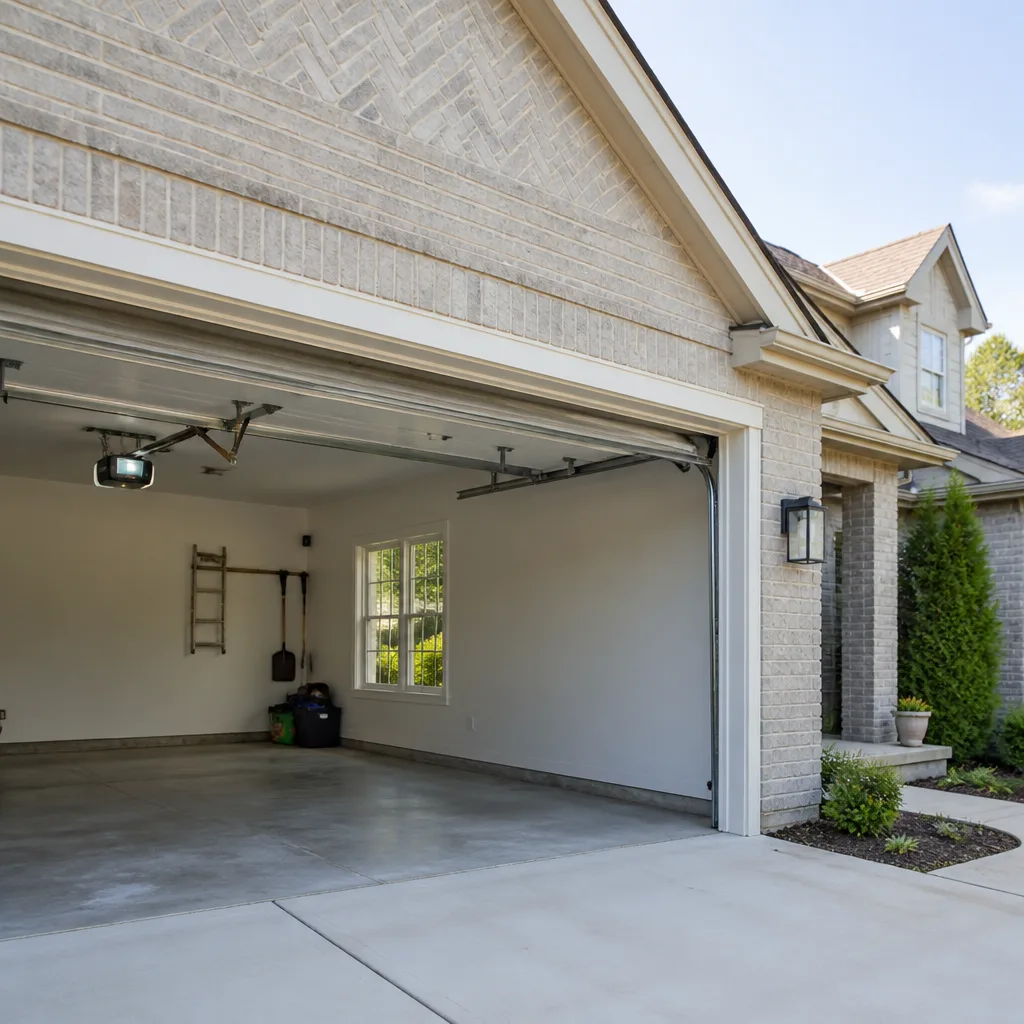 LiftMaster openers
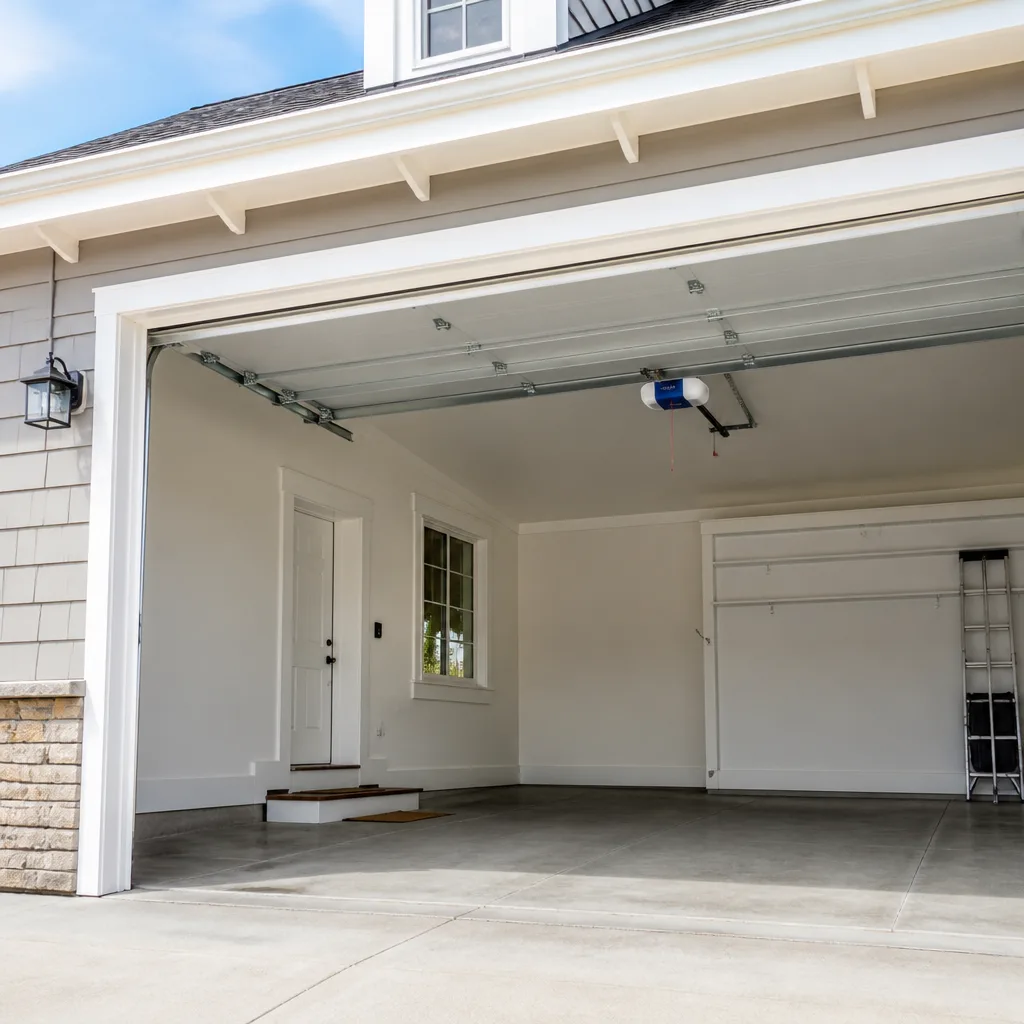 Chamberlain openers
Full 25-point door and opener safety check with every visit - springs, cables, rollers, tracks, and your LiftMaster or Chamberlain opener included
You get a price before we start. It does not change when the pro arrives.
Get your free estimateThe Complete Guide to Garage Doors in Atlantic City
Most garage door advice online assumes your home sits in a dry suburb where the air barely moves and the temperature climbs in a straight line from spring to fall. That advice doesn’t fit a barrier island with nor’easters, hurricane season, and sheets of wind-driven rain. Weather drives more of your door’s lifespan than people realize. This guide starts there: how Atlantic City’s climate and housing stock shape the door and opener you should choose, how to spot a system that’s failing, and how to decide between a repair and a full replacement. If you’re within five miles of the ocean and wondering how to make your garage door last, this is the guide to read.
Quick Answer
A garage door in Atlantic City fails on its own schedule because of climate and housing stock, not the timeline printed in a generic guide. Wind-driven rain and humidity drive corrosion on tension springs, steel tracks, and hinges, while the wind exposure of almost every block means the door is also a storm barrier. Expect a full-system diagnosis, not a guess, before any money is spent.
Styles & brands we work with
- Raised-panel steel
- Carriage house
- Modern flush
- Full-view glass
- LiftMaster openers
- Chamberlain openers
Table of Contents
- How Atlantic City’s Coastal Climate Treats a Garage Door
- Door Materials: What Holds Up Here and What Fails Early
- Storm Season, Wind Loads, and Opener Selection
- Atlantic City’s Older Garages: Sizing and Installation Reality
- Springs and Tension Hardware: The Most Dangerous Part of the System
- Openers, Smart Systems, and the Brands You Already Own
- A Full-System Diagnosis vs. a One-Part Fix
- What Garage Door Work Typically Costs in Atlantic City
How Atlantic City’s Coastal Climate Treats a Garage Door
Your garage door is your home’s largest moving part, and in Atlantic City it moves against one of the more demanding environments a residential door faces anywhere in New Jersey. The combination that matters is this: wet air nearly every week of the year, hot summers and cold winters, and straight-line wind from the water when a front comes through. Metal components don’t fail in one dramatic event. They fail in a slow sequence of wet, dry, wet that wears away protective coatings, then rust the steel underneath.
The parts that suffer first, in the order we see them:
- Springs and spring hardware. Tension springs sit above the door and work constantly. Once corrosion starts on the coil, friction inside the spring increases and the metal weakens from the inside out.
- Tracks and rollers. Steel tracks near the floor and near the door opening collect grit. Rollers wear fast when grit mixes with the residue of wet air.
- Hinges and fasteners. Small screws, hinge points, and bottom brackets are the first places a rust line appears.
- Bottom weather seals. The seal that keeps this barrier from staying wet is often the door’s only low-point defense against water on the floor.
What that means for a homeowner is a shorter maintenance rhythm than inland. Doors in Atlantic City need hinges and rollers looked at once a year, not once every three. Tracks need to be cleaned and wiped, not just lubricated. A general timeline for your garage door repair schedule is one of those things that starts with a single specific: how close you are to the water and how exposed your driveway is.
The rest of a well-kept door is just physics: metal expands in the heat, contracts in the cold, and the door gets slightly heavier in winter and slightly looser in summer. That’s normal for Atlantic City. What isn’t normal is a door that suddenly feels heavier, sags in one corner, or drags at one spot. Those are the signs that a spring, a cable, or a track has already started to fail.
Door Materials: What Holds Up Here and What Fails Early
Material choice does more to set how much trouble a door gives you in Atlantic City than any single feature. The right material for a house sits between what the door must survive and what the garage opening can support.
Steel
Steel is the most common choice on Atlantic City residential doors, and for good reason. It takes a paint finish that resists salt-laden air for years when the surface isn’t scratched. Steel doors come in insulated and non-insulated versions; an insulated one hangs a little more solidly on tracks and is easier to open smoothly. The weak points are scratched paint, dented panels, and the small hardware that was probably never designed for humid air. If paint is kept intact, a steel door is a reasonable fit for most homes here.
Wood
Wood looks warm and takes stain and color beautifully. But in wet air and wide seasonal humidity swings, wood is the least forgiving option a homeowner can pick. Moisture pulls at the joints, paint failures spread from the bottom up, and a door that looked right at installation can warp within a few seasons. If you want wood, budget for real maintenance: caulked joints, fresh finish, and inspection of the bottom rail every year.
Fiberglass
Fiberglass and composite doors won’t rust, which makes them a legitimate option for coastal homes. The trade-off is that they can feel lighter and less substantial, and the frame hardware still matters. If you’re comparing a fiberglass door with a steel door at the same opening size, ask whether the track, rollers, and opener are sized for the door you’re buying. Half of a bad installation is a door that fits and hardware that doesn’t.
Aluminum and other options
Aluminum doors have a place, but mostly in very low-profile designs or unusual openings. They can be a good fit for a small converted garage where weight matters. They are not the answer for a street-facing door that sees direct weather every week.
One useful rule of thumb when comparing materials: whatever you buy, look at how the hardware is protected from the wet and whether replacement tracks, rollers, and hinges are stock parts or a proprietary shape. Proprietary hardware is often the reason a door becomes unserviceable. The full arc from choosing a door to a full installation to routine repair is worth understanding before you commit, and that arc is the reason we focus on one trade rather than ten.
Storm Season, Wind Loads, and Opener Selection
Atlantic City gets a real storm season. Nor’easters in the cold months and hurricane season in the warm months mean a garage door is often the largest single surface on the home that takes direct wind and rain. How that door performs breaks down into three separate things: door panel strength, door weight, and opener holding power.
Here’s the typical way a homeowner should think about it, in order:
- Panel strength. Two-layer and three-layer insulated doors with reinforced strutting behind the panels hold up under wind far better than a single-layer door with a thin skin. If your door has bracing points or strut hardware, use them.
- Weight. A stronger door is heavier. Heavier doors need the right torsion springs and a track system that doesn’t flex. A storm door swap without a spring upgrade is a common mistake.
- Opener holding power. The opener is for lifting the door. Wind is not its job. What keeps the door closed against wind is a manual lock, the door’s own sealing, and a properly adjusted opener with a good force setting, not a remote opener with a long battery.
- Water sealing. The bottom seal and side seals are what stop wind-driven water from getting under and around the door. A good-looking door with a failed bottom seal will still let a wet driveway into your garage on a windy night.
On a related note, an opener that lifts a door with force much higher than the original door requires is a diagnostic sign, not a feature. If a homeowner has to increase force settings to get the door to close, the door has changed, not the opener. Recheck the door’s balance first, then decide on the opener. A proper balance check takes less than a minute and gives you more information than any display screen on the opener.
Our technicians have up to 13 years of experience, and in that time the single most common issue after a storm hasn’t changed: a door that looks fine but won’t latch, seal, or lift smoothly because a track is out of line. That becomes a fast, simple repair if caught quickly. Leave it a week and it becomes a cable and spring job.
Atlantic City’s Older Garages: Sizing and Installation Reality
Half the installation complexity in Atlantic City comes from the houses and the garages, not the door. Atlantic City has a mix of housing types: attached garages on older rows, detached garages on the same lot, and garages that were converted from a back room or a finished space. All of them change the answer to “what door fits?”
- Converted garages. A garage that was once part of the living space may have a lowered header, an off-center opening, or a door that was never really installed at the right height. A technician needs to measure the opening’s true height and the ceiling clearance above it.
- Attached garages. The wall between the garage and the home is often a fire-separation issue as well as a fit issue. The header may be shorter than on a detached build, limiting the door’s vertical travel.
- Detached garages. Often older. Often colder. Bottom-of-door water, floor settling, and a tilted concrete apron are common. A door that looks perfectly square can still drag because the ground under it isn’t level.
- Narrow lots and side entries. Some Atlantic City garages open onto a short driveway with a constrained approach. Low-headroom designs and side-mounted openers often work where a standard overhead opener can’t.
Headroom is the number that most commonly kills a straightforward install. Measure from the top of the door opening to the ceiling and check that there’s room for the door to travel up and back. If you have low headroom, a side-mounted opener can do the job with a different spring setup. If you have tall headroom, a standard overhead opener is likely the better fit. Both need a free measure before ordering.
The rule for Atlantic City homeowners is the same in every neighborhood: no door should be ordered from a guess. Measure the opening, measure the headroom, look at the apron, then order. Any reputable installer will schedule a free measure and put the exact number in a written estimate before work begins. If a quote comes in without a measurement, it’s not a quote yet.
Springs and Tension Hardware: The Most Dangerous Part of the System
Spring replacement is not a DIY job. The spring is under enough tension to cause serious injury if handled without the right tools and the right training. This is the part of the system where we ask homeowners to stop, look, and call. A trained technician uses winding bars, sizes the new spring to the exact weight of the door, and balances the door afterward. None of that is a skill learned from a video.
What we check first, in this order, on a spring call:
- Door weight. We measure the actual weight of the door with tension removed. Springs come in sizes matched to door weight; a wrong-size spring is a failing spring.
- Cable condition. Cables on a tension spring door are under load at the same time. Cables should be inspected for fraying, rust at the ends, and uneven winds on the drum. If a cable has failed, replace it with the spring.
- Anchor points and brackets. The wall bracket and center bearing plate are what hold the whole assembly. They need to be checked for play and rust.
- Number of cycles. Springs are rated in cycles, not years. If the door goes up and down more than ten times a day, it uses up its spring faster. That’s a real variable in Atlantic City, where many driveways see routine daily traffic.
Our garage door spring repair service is a dedicated specialty, not a side job. We only work on garage doors, and a spring job is not a small thing added onto other work. Because it’s handled as its own service, we can size the spring, rebalance the door, and confirm the safety systems before anything goes back in use.
A matched pair of springs is usually replaced together, because two springs of the same age that fail one after the other are a false economy. Prices are per spring, so a pair costs about twice a single quote. Salespeople who quote a pair as if it were one spring are not quoting accurately. When you compare estimates, ask whether the number covers one spring or the pair, and confirm the written estimate before the job starts.
Openers, Smart Systems, and the Brands You Already Own
Opener repair is where “brand familiar” matters most. An opener is a branded system with its own components, and a technician who knows your exact model can diagnose it fast. We work with LiftMaster, Chamberlain, Genie, Craftsman, and other major brands, covering both legacy belt-and-chain systems and modern smart systems. If your garage door opener has a WiFi module, a smartphone app, or a keypad on the wall, we’re already familiar with the setup.
What a modern opener diagnosis covers:
- Power and logic board. A door that hums but doesn’t move is often a capacitor or logic board, not the motor.
- Safety sensors. The sensors at the base of each track are the first thing to check on a door that reverses or won’t close. They get knocked, dirty, or wet.
- Drive components. Belt, chain, and screw drive each wear differently. A stretched belt or a loosened chain link causes most “the opener is dying” calls.
- Remote and keypad pairing. A remote that stops working isn’t a purchase problem; it’s usually a rolling code or battery issue that’s resolved in minutes.
- Smart modules and app pairing. For a Chamberlain or Genie system with smart features, we check the home’s network and app pairing without breaking anything else.
The right call on a repair is often a repair, not a replacement. A functioning opener of the right type and age can be fixed. A replacement only makes sense when the opener is undersized for the door, obsolete on parts, or unsafe after repeated failure. For a full-broken spring, we carry the brands and sizes needed for the repair; for an opener that’s reached the end of its life, come out and spec the replacement based on door weight and track height, not on which model is on sale.
If your opener has stopped or your door won’t close, that’s an emergency garage door service situation for most homes. A door that won’t close is a security issue because it’s the largest opening on the house. We offer emergency garage door service for exactly that reason: the door’s security function is part of the job, not an extra.
A Full-System Diagnosis vs. a One-Part Fix
A one-part fix is when a technician replaces the part that broke first and leaves. A full-system diagnosis is when a technician looks at the door as a working assembly of springs, cables, tracks, rollers, hinges, and opener, and tells you what condition each is in. On a garage door, the second is almost always cheaper over two years, because a single broken part is usually a symptom of two or three worn parts.
The typical order we follow for a full diagnosis:
- Exterior walk-around. Look at the door from outside, check the seals, look for panel damage, check for water lines on the bottom rail.
- Balance test. Disconnect the opener and lift the door halfway. It should stay in place. If it drops or rises, the springs are off.
- Track and roller check. Test for tight spots, jumps, and misaligned tracks at the floor and near the opening header.
- Opener and safety systems. Test the opener’s force limits, check the sensors, test the battery backup if there is one.
- Report and estimate. A written list of what’s healthy, what should be repaired now, and what can wait. That’s the point where the price is set.
We offer a free estimate and a written quote before any work begins. The estimate includes the specific items on the repair list and the exact price for each. If a technician gets to the job and finds something different from the estimate, the change is discussed with you first, and a new written quote is agreed before anything changes.
Two links worth having on hand when you’re worried about a specific part: our garage door repair service covers the general system, and our garage door opener repair service handles the opener itself. If you’re not sure which applies, call us. We answer 24/7, and we’ll help you figure out which one fits your situation.
What Garage Door Work Typically Costs in Atlantic City
Nobody wants a surprise number at the bottom of the invoice, and the price for garage door work varies for real reasons: door size, weight, and which brands are involved. The ranges below are typical estimates, not exact prices. The written estimate set by the technician on site is the number you pay.
| Service | Typical Cost (Estimate) | Notes |
|---|---|---|
| Spring replacement (one spring) | Ranges supplied by the estimate | Priced per spring; a matched pair usually replaced together costs about twice that |
| Opener repair | Estimate on site | Depends on part and brand; often a remote, sensor, or logic board issue |
| Track, roller, and hinge service | Estimate on site | Cost scales with number of parts and alignment work |
| Full new door installation | Estimate after free measure | Measured and ordered; scheduled, not same-day |
| Emergency garage door service | Estimate on site | Price set per job; no premium for the call |
Every number we quote is confirmed in writing before work starts. The estimate includes parts and labor, and the price is set per job. There is no separate service-call or diagnostic fee on top of the estimate. A technician doesn’t arrive, look at the door, and then add a fee. The estimate is free.
For a new door, the price depends on the door material, the size of the opening, and the hardware and opener involved. That’s why the free measure comes before the quote. If someone gives you a number over the phone for a full door replacement without measuring the opening or checking headroom, it’s a guess, not a quote. The right sequence is always: free measure, written estimate, agreed price, then scheduled install. Repairs can be faster. Same-day service is available for standard repair calls that come in during dispatch hours.
Common Mistakes to Avoid
- Ignoring a spring that has lost tension. A door that feels heavy or won’t stay up when opened halfway is telling you the spring is worn. Driving it with the opener or “helping” it by hand wears the rest of the system and can fail suddenly.
- Choosing a door by looks alone. In Atlantic City, a beautiful wood door with a thin clear finish will be replaced or refinished well before a painted steel door will. Choose material for the climate you have, not the brochure.
- Letting a scratched finish go unrepaired. Scratched paint on a steel door in wet air becomes rust, and rust becomes a hardware problem. Touch up small scratches promptly.
- Skipping the free measure before a replacement. Headroom and opening height are the two things most likely to change the price or the door you can actually fit. Measure first.
- Increasing the opener’s force setting to solve a balance problem. That masks a spring problem and adds strain to the opener. Get the door balanced and the force setting can go back to standard.
- Replacing one spring of a pair. A pair of springs installed at the same time tends to fail close together. Replacing both is usually the better long-term call, and a quote that treats a pair as a single spring isn’t accurate.
- Trusting a quote for a full replacement given over the phone. No measurement, no written estimate, no real price. A proper quote is in writing after a free measure.
See the difference
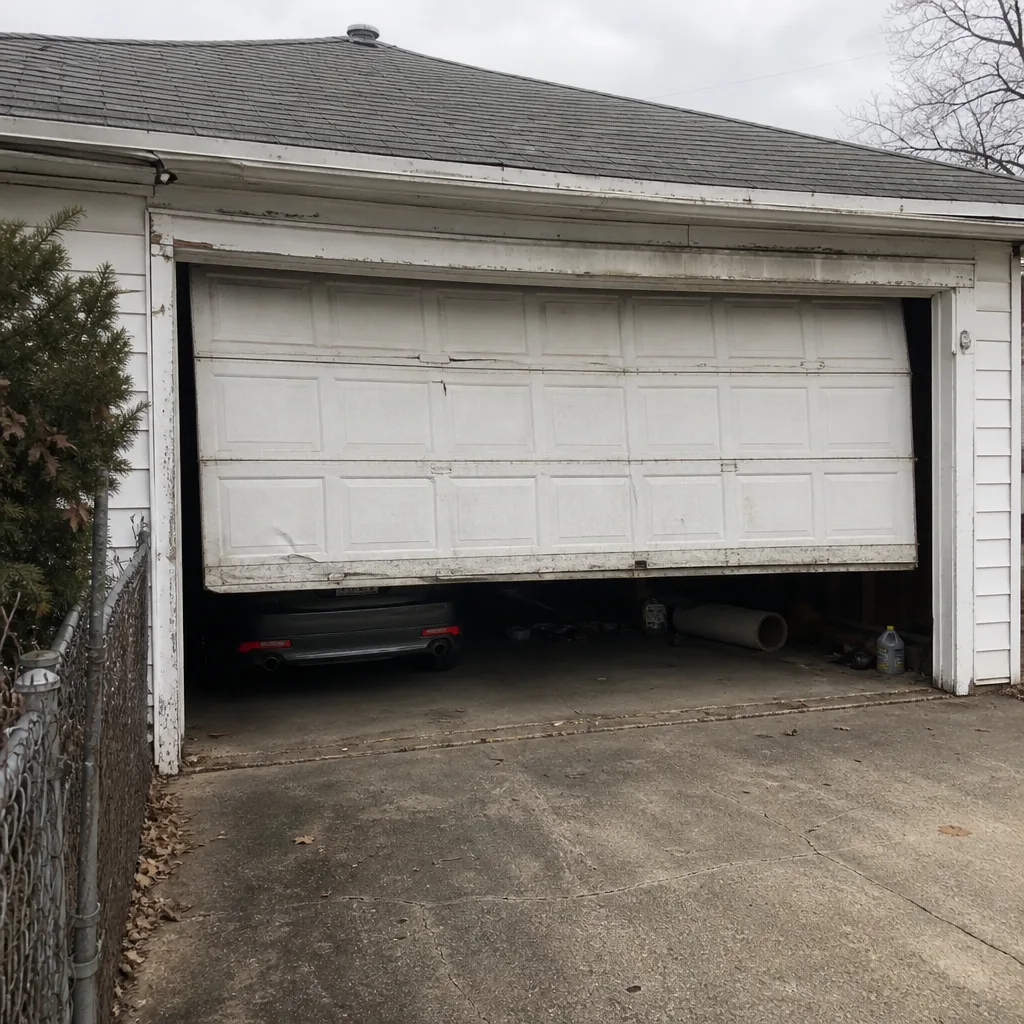 Before
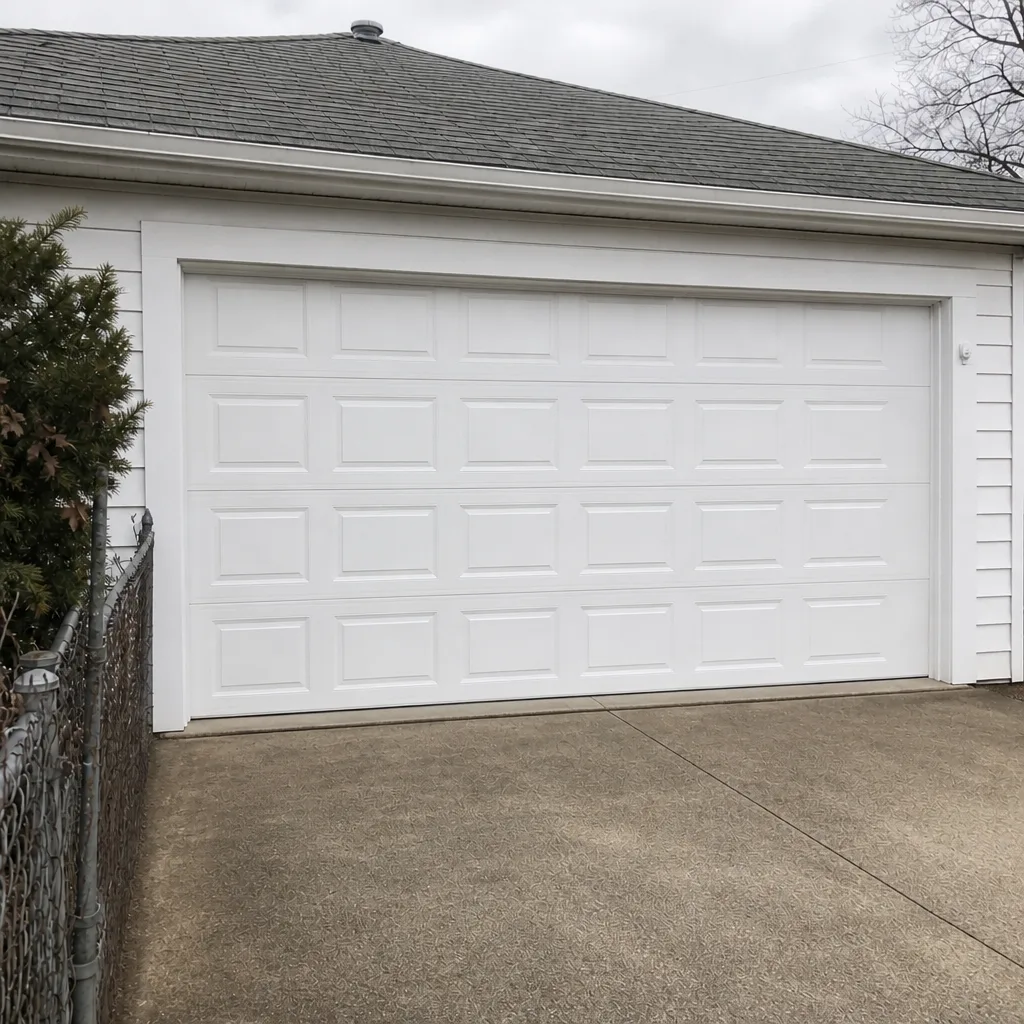 After
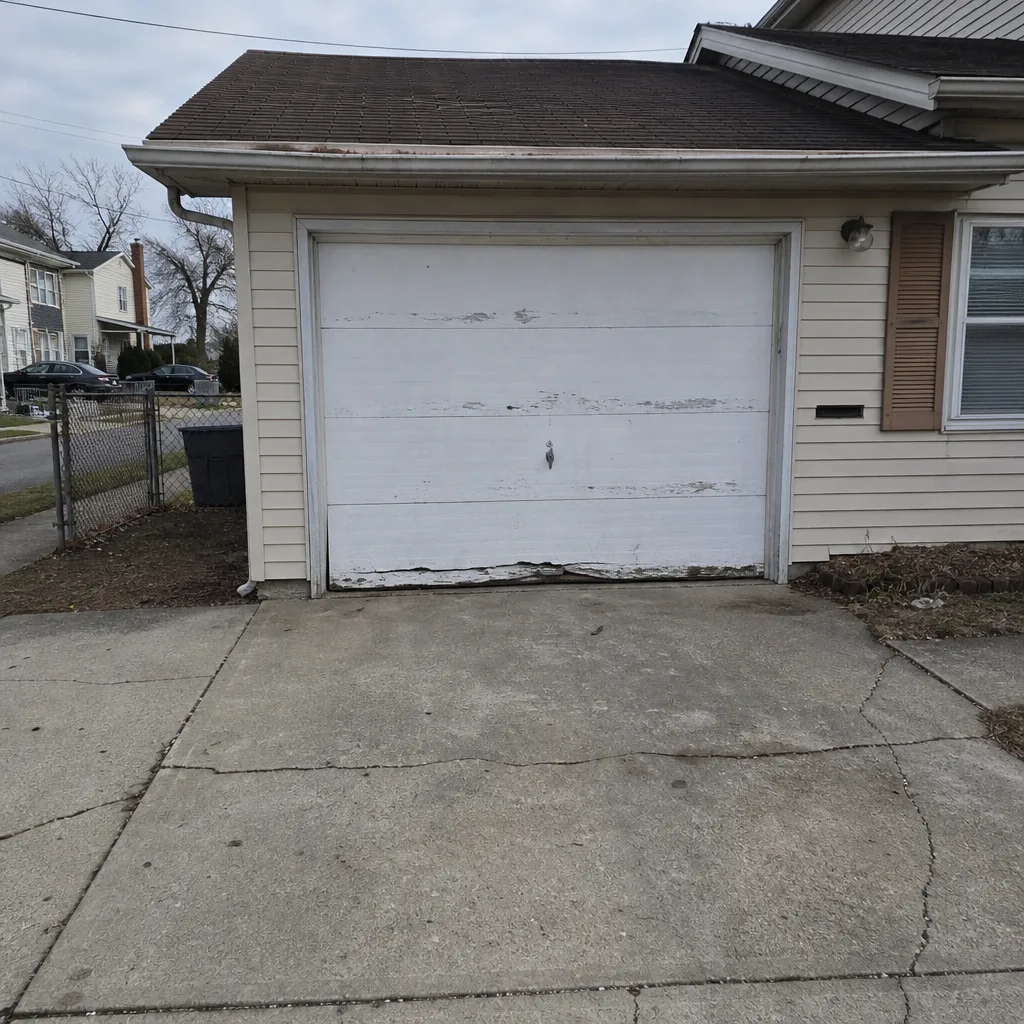 Before
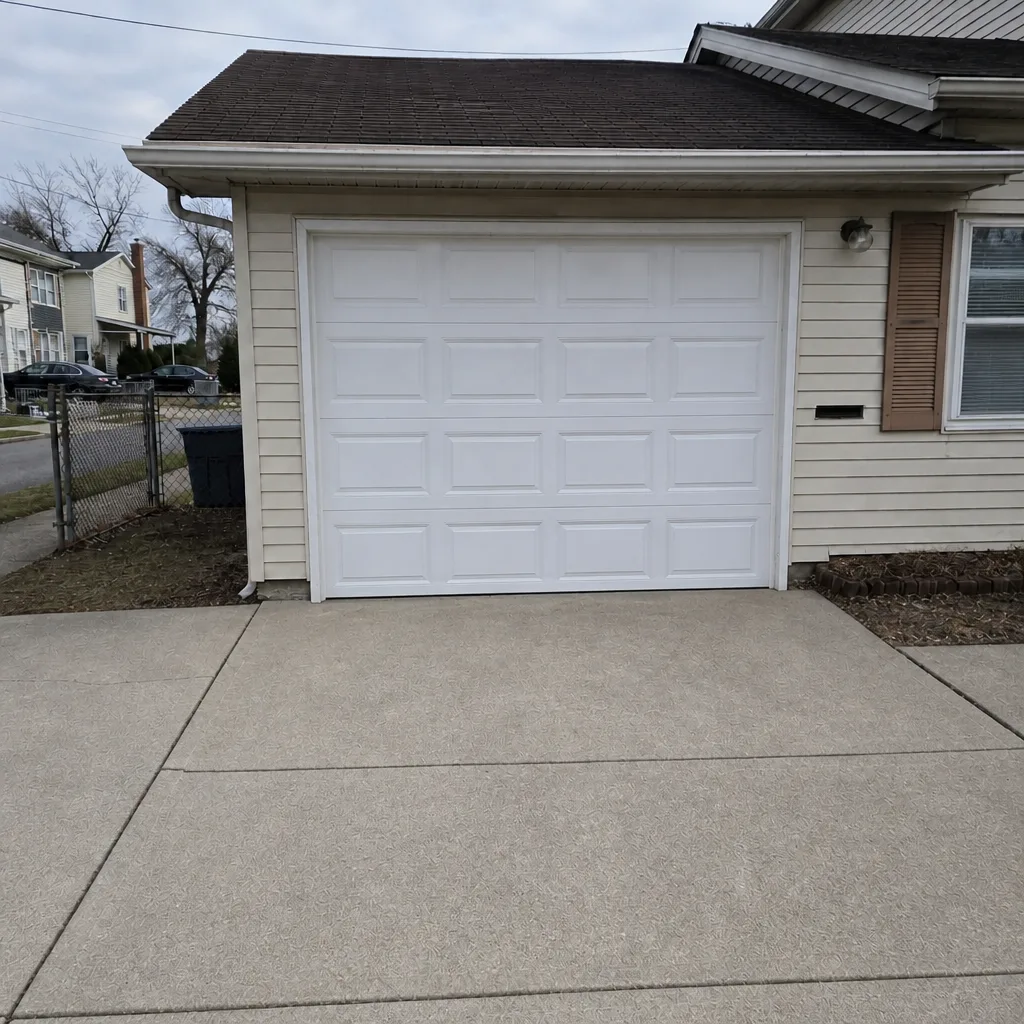 After
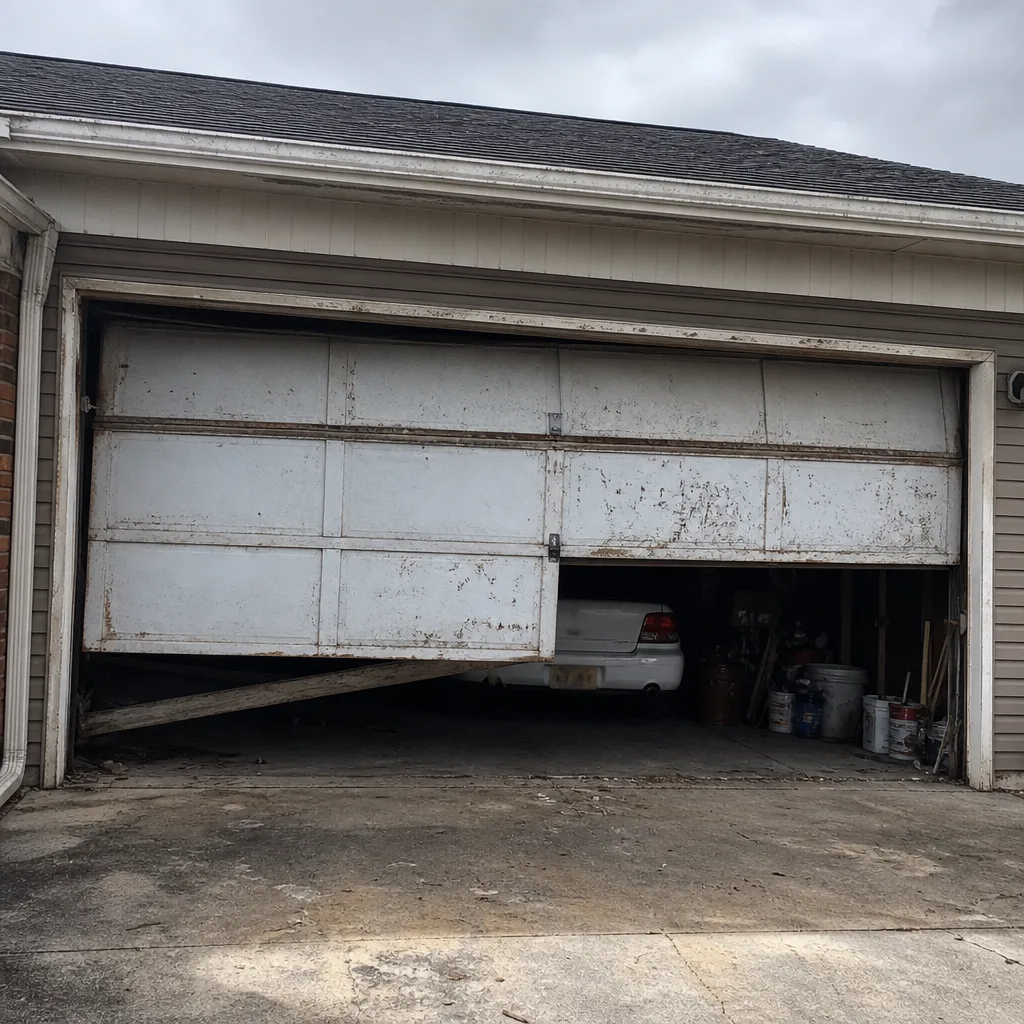 Before
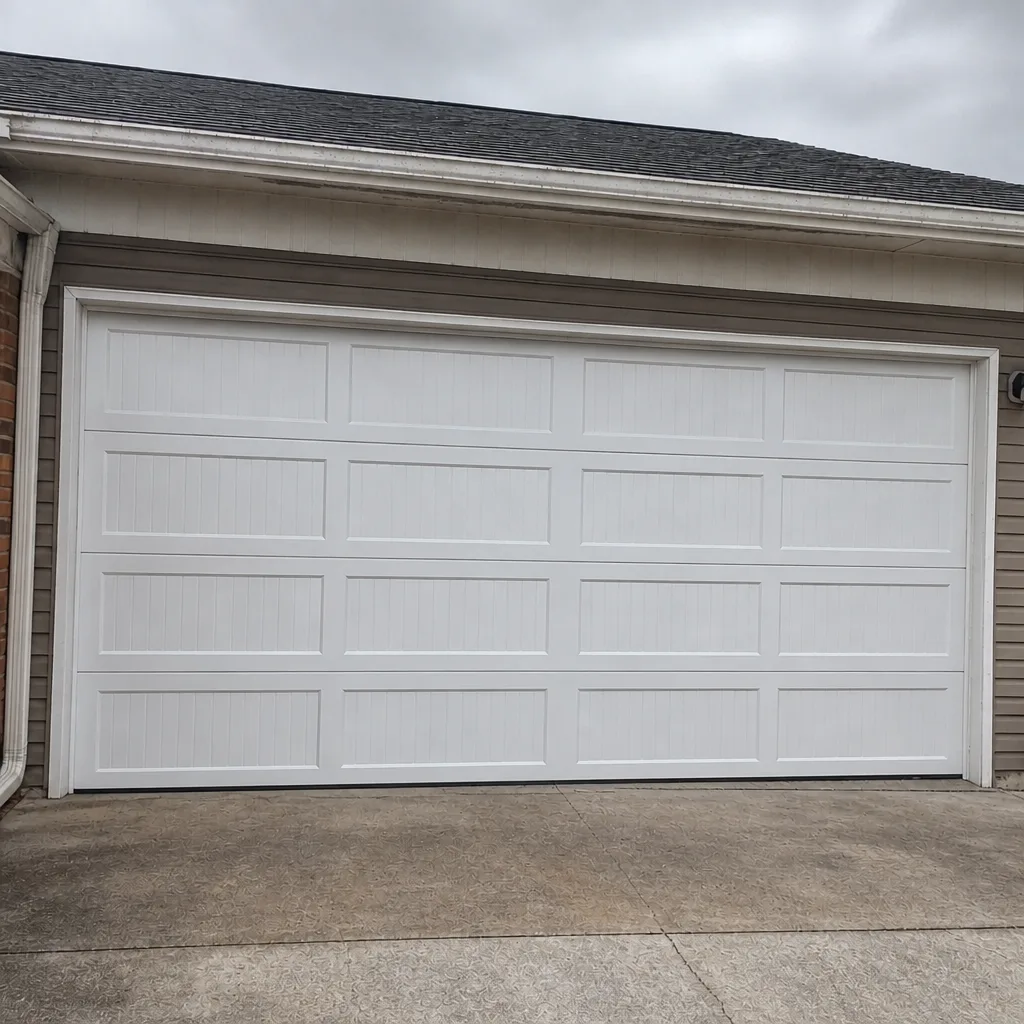 After
When to Call a Professional
Call a professional immediately if any of the following apply: a spring has visibly broken into two pieces, a cable has failed or snapped, the door is off its tracks, the door won’t close at all, or the opener’s safety sensors are malfunctioning and the door reverses at the floor. If a car is trapped inside or the garage is the primary entrance to the house, these are urgent, not “next week” items. Pick up the phone and call a specialist rather than attempting a DIY fix. The spring and cable parts carry enough energy to cause genuine injury. On the installer side, call a specialist whenever you’re thinking about a full door replacement, a material change from wood to steel, or a change in opener type. Each of those needs a free measure and a written estimate before any work starts.
Garage Door Repair Atlantic City offers free estimates in Atlantic City. Call (877) 696-4577. We answer 24/7. Fast dispatch from 7am to 7pm, Sunday through Friday. We work on your brand: LiftMaster, Chamberlain, Genie, Clopay, Amarr, Wayne Dalton, Craftsman, and Raynor, plus any other major system installed on your door.
Frequently Asked Questions
Once a year for hinges, rollers, tracks, and a balance check. The wet, humid air near the ocean accelerates corrosion on springs and hardware compared with inland homes, so annual service isn’t just marketing here. Call (877) 696-4577 for a free estimate.
A spring repair is a fix to a spring that’s still working, like adjusting tension or replacing a worn cable alongside a healthy spring. A spring replacement is a new spring sized to the door’s weight, and because springs are rated in cycles, a broken spring means replacement, not repair. Call (877) 696-4577 for a free estimate.
We work with 8 leading brands, including LiftMaster, Chamberlain, Genie, Clopay, Amarr, Wayne Dalton, Craftsman, and Raynor. That covers most of what’s installed on Atlantic City homes, including both legacy and smart integrated openers. Call (877) 696-4577 to confirm your model.
Yes for standard repair calls during dispatch hours. We answer 24/7, and fast dispatch runs from 7am to 7pm, Sunday through Friday. A call outside dispatch hours is booked into the next opening, Sunday through Friday, 7am to 7pm. A door that won’t close is a security issue, so call as soon as you notice.
The price depends on door material, opening size, and the hardware required. A free measure comes before any written quote, and the number on that written estimate is the price you pay. Call (877) 696-4577 and we’ll schedule the free measure.
Installation is measured, ordered, and scheduled. That means there’s usually a lead time between the free measure and the install. We confirm the timeline in writing as part of the written estimate before you commit to anything. Call (877) 696-4577 for a free estimate.
The local pro we connect you with is licensed and insured as the state requires. We don’t invent credentials we can’t verify, and we’re happy to answer questions about the local pro assigned to your job. Call (877) 696-4577 for a free estimate.
The Bottom Line
Garage doors in Atlantic City are a whole different animal than garage doors inland. Wickedly wet air, wide temperature swings, and a real storm season shorten every part’s usable life if the door isn’t maintained. Pick a material that fits the climate: painted steel or fiberglass over wood, always with a good bottom seal and a sound track. Have the door measured before you order. Have the springs checked before you use the opener. Treat the spring and cable parts as the safety-critical hardware they are, and call a specialist before you touch them. Get a written estimate before work begins, and know that the number on paper is the number you pay. Our team’s job is to make the diagnosis, not the fix, your starting point.
Written by the team at Garage Door Repair Atlantic City.